Uneven steer tyre wear can indicate alignment, steering or suspension issues. Identifying the cause early can help extend tyre life, reduce replacement costs and keep your truck running efficiently.
For truck operators, tyre condition plays an important role in vehicle performance, safety and operating costs. Steer tyres are particularly important as they influence how the vehicle handles, responds to steering inputs and maintains stability on the road. When wear starts appearing unevenly across the tread, it is worth investigating rather than simply replacing the tyres.
Wheel alignment issues are not always immediately obvious. A truck may continue to drive while alignment problems gradually contribute to excessive tyre wear. Understanding the different wear patterns can help identify potential issues and determine when a professional inspection is needed.
Common Tyre Wear Patterns
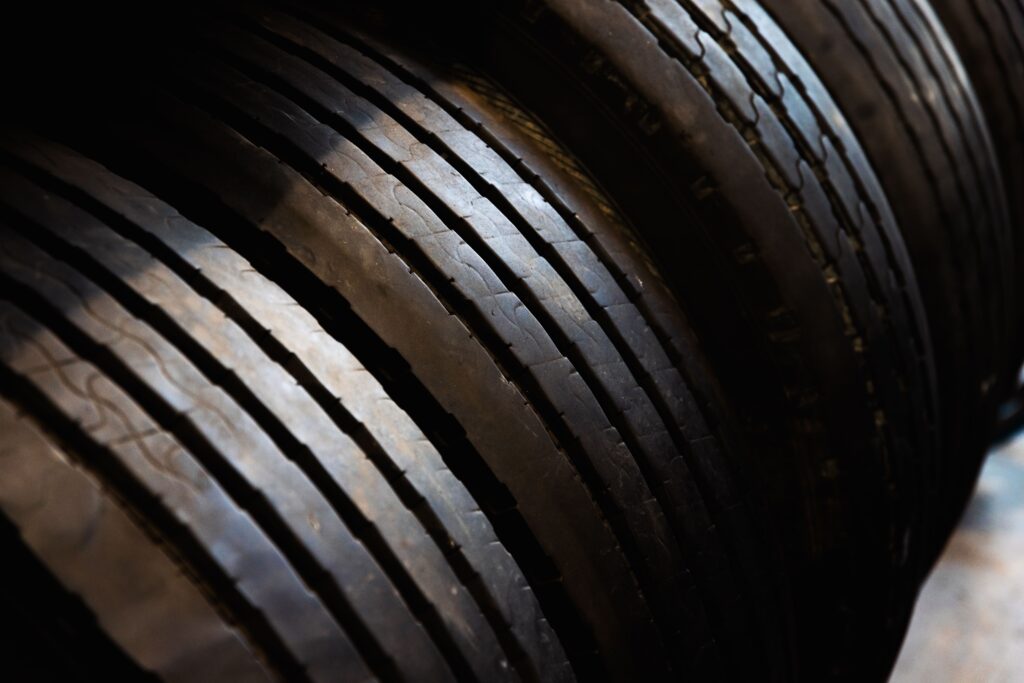
Different tyre wear patterns can provide useful clues about what may be happening with your truck’s alignment, steering or suspension.
- Feathering: Tread ribs feel smooth in one direction and sharp in the other. This can indicate incorrect toe alignment.
- One shoulder worn: May point to incorrect toe or camber, often caused by worn kingpins or bushes, axle damage or loading issues.
- Uneven wear across both steer tyres: Wear on opposite shoulders of each steer tyre (for example, outer edge on one and inner edge on the other) can indicate drive axle misalignment, causing the truck to track incorrectly.
- Cupping or scalloping: May result from worn shock absorbers, wheel imbalance or suspension issues.
- Diagonal wear or flat spots: Diagonal wear or flat spots on drive or trailer tyres can be linked to misalignment, mismatched dual tyres or braking issues.
Tyre wear patterns can have several causes, so a professional inspection is recommended before replacing tyres.
Understanding Toe Alignment
Toe alignment refers to the direction the tyres point when viewed from above the vehicle. Depending on the setting, the front edges of the tyres may point slightly towards each other (toe-in) or away from each other (toe-out).
When toe alignment is incorrect, the tyres can be forced to scrub against the road surface as the truck travels. This creates additional friction and can contribute to feathering or uneven tread wear.
Even small alignment differences can have an impact over long distances, particularly for trucks that regularly travel on highways or cover high kilometres. If the steering tyres are wearing unevenly or the truck feels like it is not tracking straight, toe alignment is worth checking.
Correct toe settings help the steer tyres roll in the intended direction, supporting more consistent tyre contact with the road.
Understanding Camber Alignment
Camber describes the inward or outward angle of a wheel when viewed from the front of the vehicle.
If the top of the wheel leans outwards, it has positive camber. If it leans inwards, it has negative camber. The correct camber setting helps distribute the vehicle’s load across the tyre tread.
Incorrect camber can contribute to excessive wear along one shoulder of the tyre. However, shoulder wear can also be caused by other factors, including incorrect toe settings, worn suspension components, damaged axles or uneven loading.
This is why it is important to look at the overall condition of the vehicle rather than assuming one tyre wear pattern has a single cause.
How Drive Axle Alignment Affects Steer Tyres
Steer tyre wear is not always caused by an issue at the front of the truck. Drive axle alignment can also influence how the vehicle tracks along the road.
When drive axles are not correctly aligned, the truck may travel slightly off-centre, creating a tracking issue. The steer tyres can then experience additional forces as the driver makes constant steering corrections to keep the vehicle travelling straight.
This can contribute to uneven wear across the steer tyres, even when the front wheel alignment appears to be within specification.
For trucks with multiple axles, checking the relationship between the steer and drive axles is an important part of identifying the cause of unusual tyre wear. A complete alignment assessment can help identify whether the issue is isolated to the front axle or connected to the vehicle’s overall alignment.
Other Factors That Can Cause Uneven Tyre Wear
While wheel alignment is a common cause of uneven tyre wear, it is not the only factor worth considering.
Several mechanical and operating conditions can influence how tyres wear over time.
Suspension and steering components
Worn kingpins, bushes, shock absorbers and other steering or suspension components can affect wheel positioning and stability. If these components have excessive movement or wear, alignment settings may not remain consistent.
Incorrect tyre pressure
Tyres operating at incorrect pressures can experience uneven contact with the road. Underinflation and overinflation can both contribute to irregular tread wear, affecting tyre life and vehicle performance.
Vehicle loading
Uneven or excessive loading can change how weight is distributed across the axles. This can influence tyre contact and contribute to uneven wear, particularly when a vehicle regularly operates under varying load conditions.
Driving conditions
Frequent cornering, rough road surfaces, heavy braking and repeated stop-start driving can all influence tyre wear. These conditions should be considered when assessing whether wear is related to alignment or normal operating demands.
When Should You Book a Wheel Alignment?
Consider an alignment when fitting new steer tyres, noticing uneven wear, completing steering or suspension repairs, or experiencing steering pull.
A thorough check should include the steer and drive axles, and the trailer where necessary. Tyre rotation can help distribute normal wear but won’t correct underlying mechanical issues.
It is also worth arranging an inspection if you notice the steering wheel sitting off-centre, the truck drifting to one side or unusual changes in handling. These symptoms do not always indicate an alignment issue, but they can be signs that something needs attention.
Regular inspections are particularly important for trucks that cover long distances or operate under demanding conditions. Identifying alignment issues early can help prevent additional tyre wear and reduce the likelihood of avoidable replacement costs.
How Often Should Truck Wheel Alignment Be Checked?
There is no single inspection interval that suits every truck. The frequency of alignment checks can depend on the vehicle, its operating conditions, kilometres travelled and the manufacturer’s recommendations.
As a general maintenance practice, alignment should be considered when:
- New steer tyres are fitted.
- Uneven or unusual tyre wear becomes visible.
- Steering or suspension components are repaired or replaced.
- The vehicle experiences a significant impact, such as hitting a pothole or kerb.
- The truck begins pulling to one side or handling differently.
- Routine inspections identify possible alignment concerns.
Checking tyre condition regularly can help identify early warning signs before uneven wear becomes more extensive.
Keep Your Truck Moving with Royale Truck Services
Royale Truck Services provides truck wheel alignment and tyre balancing to help identify wear issues and get more life out of your tyres.
Before replacing a worn set, have the cause assessed by our team.
A professional assessment can help identify whether uneven wear is related to toe, camber, drive axle alignment or other mechanical issues. Addressing the underlying cause can help improve tyre performance, support more consistent wear and reduce unnecessary replacement costs.
Keeping your truck’s tyres in good condition is an important part of maintaining a reliable fleet. Regular checks and timely alignment assessments can help keep your vehicles performing as they should.
Call 1300 500 002 to book with Royale Truck Services.
How Often Should You Check Your Tyres?
Regular tyre inspections can help identify uneven wear and potential issues before they lead to premature replacement. Check your tyres as part of your routine vehicle inspections and servicing schedule, paying attention to tread wear, visible damage and changes in handling. If you notice unusual wear or steering issues, arrange a professional inspection to identify the cause.
Royale Truck Services provides truck wheel alignment and tyre balancing services across NSW and VIC. Find your nearest location here.